Job 29:12-17
…because I rescued the poor who cried for help, and the fatherless who had none to assist them. The one who was dying blessed me; I made the widow’s heart sing. I put on righteousness as my clothing; justice was my robe and my turban. I was eyes to the blind and feet to the lame. I was a father to the needy; I took up the case of the stranger. I broke the fangs of the wicked and snatched the victims from their teeth.
The book of Job, and particularly this passage, throws us into one of the rawest arguments in the Bible. At its heart, it isn’t just the question of why we suffer, but what it even means to be a good person. In chapter 29, Job, defending his life to his friends, paints a picture of his own integrity. He didn’t just write checks to charity; he says he rescued the poor and the fatherless, brought joy to widows, was a set of eyes for the blind and feet for the lame, and shattered the power of the wicked. This isn’t a list of good deeds; it’s a picture of a man who lives and breathes justice.
What’s so striking is that Job doesn’t base his defense on a set of rules. He doesn’t quote the law from Sinai or point to a prophet—not just here but anywhere in the book. He just appeals to righteousness itself, as if it’s something you can see and touch and recognize on its own. This begs a much deeper question: what kind of goodness does Job actually believe in?
The whole tension of the book really hinges on two completely different ways of understanding righteousness.
The first is what we might call transactional righteousness. It works like a moral equation: do good, get blessed; do evil, get punished. This view assumes the universe runs on a predictable, mechanical system of cause and effect. Job’s friends are relentless defenders of this model. For them, it’s simple: God is just, so if Job is suffering, he must have done something to deserve it. The math has to add up.
There’s a certain comfort in that kind of thinking, isn’t there? It gives us a sense of control. It suggests we can manage our lives and outcomes through our behavior. If something goes wrong, someone must have broken the rules. Righteousness becomes a form of leverage.
But Job’s life blows that equation to hell, from where it originates.
He insists on his innocence, cataloging how he’s defended the vulnerable and stood up for the needy. His life was a reflection of what the Bible consistently calls true justice: caring for the orphan, the widow, the oppressed—the sacred triad of broken presence. And yet, despite his resume of good deeds, he’s drowning in suffering.
If goodness were just a transaction, his suffering would prove it was all a lie. But Job doesn’t let go of righteousness. He doggishly clings to it.
This is where we find the second kind of righteousness, which we call an ontological righteousness. This isn’t about a transaction; it’s about being in tune with reality. It’s the belief that goodness is woven into the very fabric of the universe. Justice isn’t a bargaining chip you use to get things from God; it’s about participating in the world as it was meant to be.
Job’s protest shows that he believes righteousness is real, on a level deeper than just getting rewarded for it. His agony isn’t a crisis of faith; it’s a crisis of predictability. He believed that being good should matter because goodness is what’s ultimately true. When his suffering shatters that expectation, the scandal isn’t that goodness is meaningless, but that the universe itself seems to be morally broken.
This deeper righteousness says: I do good simply because it is good. I defend the vulnerable because their vulnerability makes a claim on me. I align my life with justice because it reflects the deep grain of reality, whether I get a prize for it or not.
This distinction changes how we read the whole book. Job’s friends are like moral accountants, treating goodness as a currency. Job, through his pain, becomes a moral realist. He insists that righteousness isn’t proven by a big bank account or a life of ease, and it isn’t disproven by suffering.
When God finally shows up, He doesn’t give Job a list of his secret sins. He doesn’t even double down on the simple reward-and-punishment model. Instead, He pulls back the curtain on the sheer vastness and wild complexity of creation. The universe is morally real, but it’s not a simple machine. It’s far bigger than our neat little equations. The book doesn’t get rid of justice; it just shatters the illusion that it works like a vending machine.
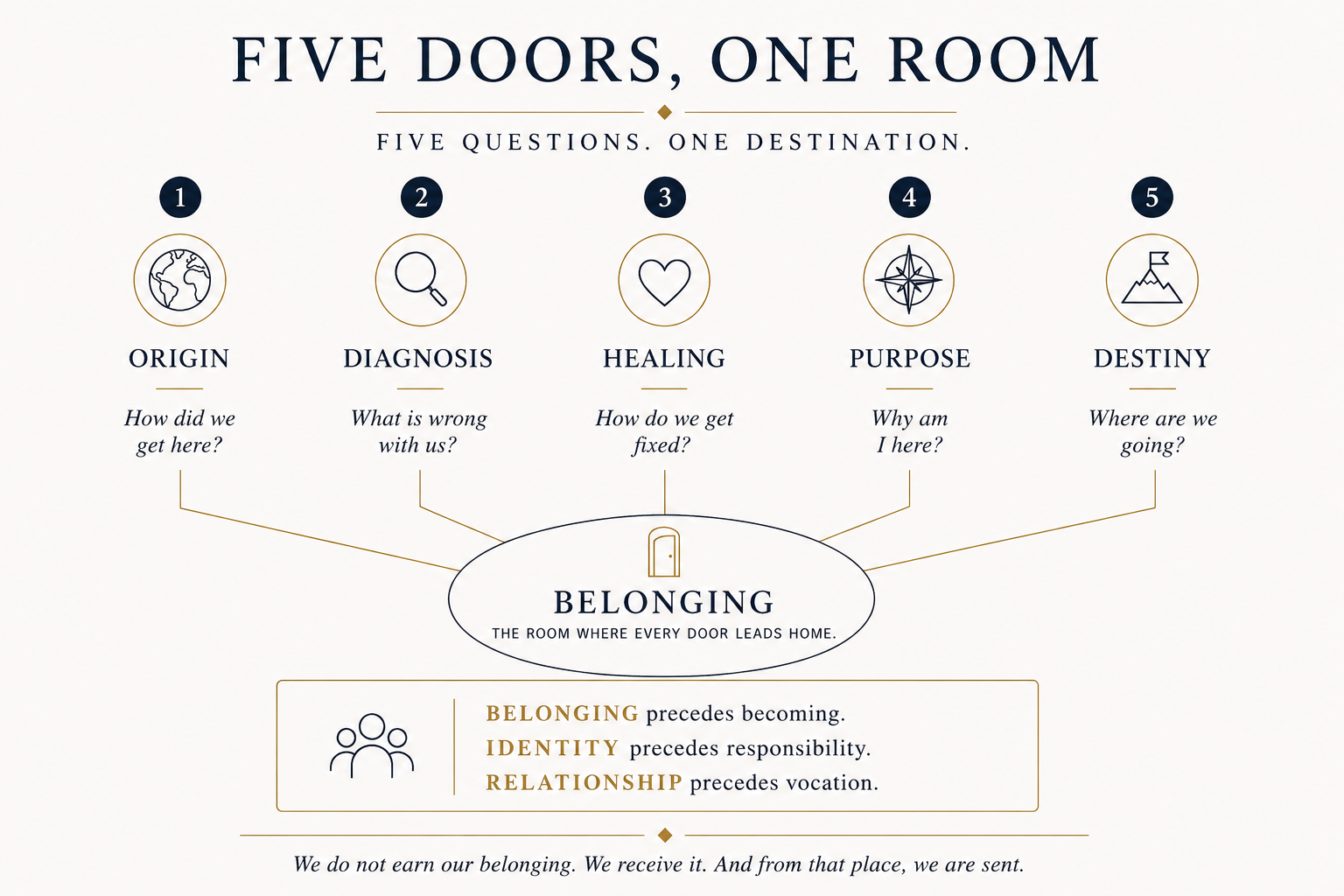
This distinction also helps explain why the Bible is so insistent on caring for the orphan, the widow, and the stranger. These aren’t just categories for social aid; they represent three fundamental ways a person can be torn from belonging: losing parents, losing a partner, or losing a community. To care for them is not merely to obey a rule; it is to participate in repairing the very fabric of human connection, which is the deepest existential need of every human being.
Job lived his life as someone who repaired those tears. He embodied justice. So when he becomes the one who is suffering, his moral core holds firm even as his world falls apart.
That’s what moral maturity looks like. A transactional goodness collapses the moment the rewards stop coming. But a deeper goodness, one based on being aligned with what’s true and real, can endure anything. The book of Job invites us to move from trying to use morality as a strategy to simply participating in it. Goodness isn’t a technique for getting blessings; it’s a way of standing upright in a world that will, inevitably, have storms.
This has huge implications for how we think about faith and spiritual life. If righteousness is a transaction, then you have to earn your sense of belonging. But if it’s about alignment with reality, then belonging is a deeper truth about who we are. We are made for justice. We are made for connection. We are made for each other.
In the end, Job doesn’t get an explanation for his suffering. He has an encounter with the breathtaking grandeur of God and creation. And that encounter is enough to anchor him again—not in the comfort of predictability, but in the sturdiness of reality.
Righteousness is still real. It’s just not a contract anymore. It’s a way of being alive in the moral world.
We see this same tension playing out today, with painful clarity. So much of the division in our faith communities isn’t about whether righteousness matters, but about which brand of transactional righteousness is the right one.
One side champions acts of social justice: advocacy, fighting oppression, and reforming systems. The unspoken logic can be: if we fight for the right causes, we are on God’s side. The other side champions personal morality: sexual ethics, doctrinal purity, and individual discipline. Their unspoken logic is similar: if we keep ourselves pure, we are on God’s side.
They focus on different actions, but they’re often working from the same framework: Right Performance → Divine Approval → Moral Legitimacy. The debate becomes a bitter rivalry over who has the better moral currency, a fight between justice-as-performance and purity-as-performance. Both assume that righteousness is how you prove you belong in God’s family, and both risk turning faith into a tool for feeling superior.
This is precisely the mindset that the story of Job unravels. He was a man who embodied justice. As we would say today. “He had the receipts”. Yet he couldn’t use his goodness to control God or keep suffering at bay. And what that means is that righteousness—whether it looks like social action or personal holiness—can never be used as leverage.
When goodness is a transaction, it forces us to compare and measure. It creates factions. But when goodness is about aligning with the character of God and the grain of reality itself, it’s not about proving our status. It’s about reflecting something that is eternally true.
In the Bible, justice and holiness were never meant to compete. They are two sides of the same coin: alignment with God. Holiness that is indifferent to justice hardens into a self-protective, sterile purity. Justice that is severed from holiness slides into a self-righteous, embittered activism. And both, when untethered from God, can curdle into mere performance—a stage play designed to build a following rather than to transform a harsh reality.
A deeper, more grounded righteousness holds them together. It acts justly because God is just. It pursues holiness because God is holy. You don’t do these things to earn your place; you do them from your place as someone who already belongs.
The question then shifts from “Which group has the better moral record?” to the far more challenging question: “Are we, together, becoming people who are aligned with the character of God in both justice and holiness?”
That question strips away the comfort of comparison and the illusion of control. It calls us to act justly even when it costs us, and to pursue holiness even when no one is watching. It asks us to give up using our righteousness as a weapon.
The book of Job is an invitation to grow up, to move beyond moral scorekeeping and into a bracing moral realism. Righteousness is not a contract. It is participation in the very structure of being. And that changes everything.
If goodness is about taking part in what is real, then mending a broken world isn’t just about having the right opinions or working harder. It’s about aligning ourselves with the sacredness of one another. This leads to a different kind of commitment, not a new list of rules to follow, but a quiet decision to be part of the mending.
It might sound something like this: (think of this as a kind of oath)
Because every person is sacred and the damage we do is real, I want to live in a way that heals, not harms. I want to stop calling things “good” if they break another person’s soul. I want to stop disguising my own selfishness as spirituality, or my comfort as maturity.
I want to remember that my freedom affects everyone around me. My strength is for protecting, not dominating. My voice is for sheltering, not wounding. I want to hold my own desires up to the light of love and ask not just “What do I want?” but “Will this build or break the world around me?”
And when I fail, when I cause harm, I don’t want to hide. I want to own what I’ve done, because facing the truth is the only way to start making things right. I want to choose restoration over self-protection, and reconciliation over my own image. I want to use my freedom to mend what’s been torn and to stand between the vulnerable and the harm that hunts them.
I refuse to pass on the brokenness that was passed down to me. I want to build spaces where people feel safe, where promises are kept, and where the outsider can finally find a home. I want to make my decisions knowing that someone is coming after me, and they deserve a world built on stability and truth.
This isn’t about earning a spot or proving I’m good. It’s just about trying to be part of the mending. It’s a commitment that says no to harm, not to win points, but because harm violates the way things are meant to be. It seeks goodness not to show off, but because our world is so painfully fragmented. It pursues justice not to feel superior, but because every vulnerable person has a sacred weight.
This is the direction Job is moving in this text. He loses his tidy, predictable world, but he doesn’t lose his integrity. He stops trying to use goodness as leverage and simply stands upright in the storm, because he’s learned that righteousness isn’t a deal you make—it’s the ground you stand on.
We don’t need another group of moral accountants arguing over the ledger. We need rebuilders. Not people performing justice or performing purity, but people who are quietly participating in the work of restoration. Righteousness isn’t a contract. It is participation in the deep grain of existence.
And when we start to live that way, we stop dividing ourselves into rival camps and start becoming builders of a world where everyone can belong. That is the hard-won maturity Job points us toward. And that is the work waiting for us now.