El Roi: The Meaning of “The God Who Sees Me”
She was a servant. A surrogate. And in the end, a scapegoat.
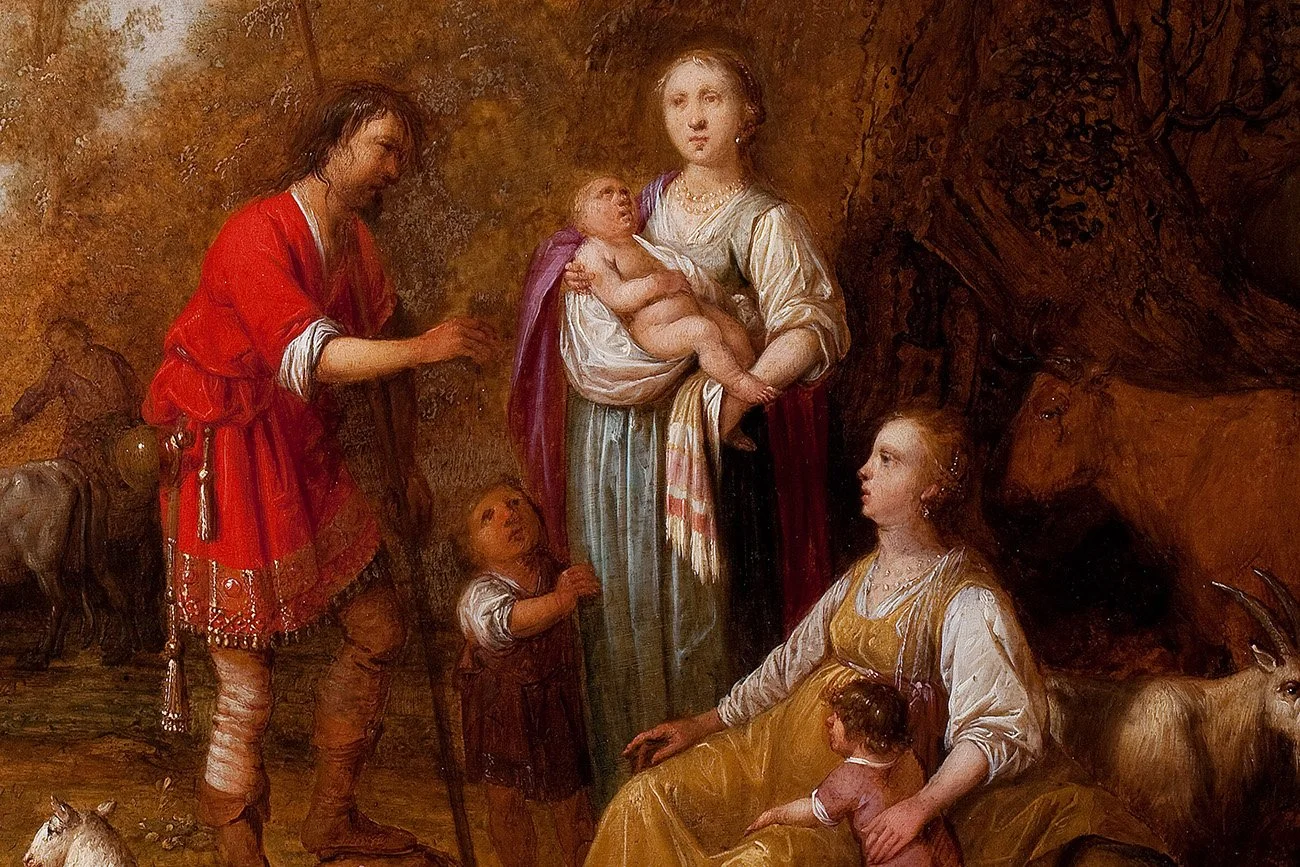
Hagar enters the biblical story out of nowhere, with no family tree to her name. We get Abraham’s lineage, chapter and verse. We feel the weight of Sarah’s barrenness. But Hagar just appears—an Egyptian slave, a piece of property. She is handed over to Abraham so that Sarah can make a promise, forcing God’s promise on her own terms. And when that forced promise becomes complicated, Hagar is told to go.
The story in Genesis 16 is brutally honest. We’re told Sarah “dealt harshly” with Hagar. The original Hebrew word is visceral—it means to afflict, humiliate, oppress. It’s the same word used later to describe what the Egyptians did to the Israelites. In a heartbreaking turn, the oppressed becomes the oppressor, and the cycle of wounding continues.
So Hagar runs.
Pregnant, alone, and invisible to the world, she flees into the wilderness. She embodies the human cost of power, solving its own problems. And it’s there, in the middle of nowhere—far from the home that used her—that God meets her.
Not Abraham. Not Sarah. Hagar.
The angel of the Lord finds her by a spring and does something that should stop us in our tracks: He calls her by name. “Hagar, servant of Sarai…” After being treated like a tool, God addresses her like a person.
This is the first time in the entire Bible that God seeks out and speaks directly to a woman in her pain. Not the matriarch of the faith, not the one carrying the covenant, but the servant. The foreigner. The disposable one.
In response, Hagar does something no one else has done. She gives God a name. “You are El Roi,” she says, “the God who sees me.”
Just let that sink in. The enslaved, exploited, and exiled woman becomes the first person in scripture to give God a name. Hagar is the face of anyone who has been used to keep a broken system stable, blamed when their very presence reveals its flaws, and thrown out when they become inconvenient.
And yet, she is seen. Not as a means to an end. Not as a problem to be solved. As herself. As beloved. The wilderness, for her, becomes a holy place. This is what systems of exploitation do. They turn people into objects—labor, wombs, votes, or statistics. And when these systems feel threatened, they protect themselves by sacrificing the vulnerable. They try to save the promise by throwing away the person.
Hagar’s story exposes that twisted logic. And God’s response shatters it. He doesn’t meet her in Abraham’s respectable tent. He meets her in her exile. He is not just the God of patriarchs and covenants; He is the God who goes looking for those who have been used and cast aside.
Hagar does go back, for a time. The Bible is realistic—the system doesn’t just magically fix itself. But Hagar is different now. She knows she is seen. Later, when she and her son Ishmael are cast out for good, God hears the boy crying. He opens Hagar’s eyes, and she sees a well of water that was there all along. Seen. Heard. Cared for.
Hagar’s story isn’t about finding beauty in suffering. It’s about a God who shows up in the middle of it and refuses to let a person stay invisible.
If you’ve ever been made to feel like the solution to someone else’s problem, or been pulled into a system that chewed you up and spit you out; if you’ve ever been blamed for tensions you never created, or felt your worth was measured only by what you could provide… Hagar’s story is for you. More importantly, El Roi is for you.
The voice of our deepest wounds says, “I’m alone. No one sees me.” The God of Hagar says, “I see you. I hear you. I know your name.” In a world that is still all too comfortable with using people and discarding them when they’re no longer convenient, Hagar is not some minor character. She’s a mirror. And her story leaves us with a heavy question: Where are we, in our own lives, participating in systems that use others to secure our own future?
The same God who sees Hagar also sees us. And being seen by him is both the deepest comfort and the hardest challenge. The wilderness is still full of springs. And the God who sees has not stopped walking toward the used and unseen.