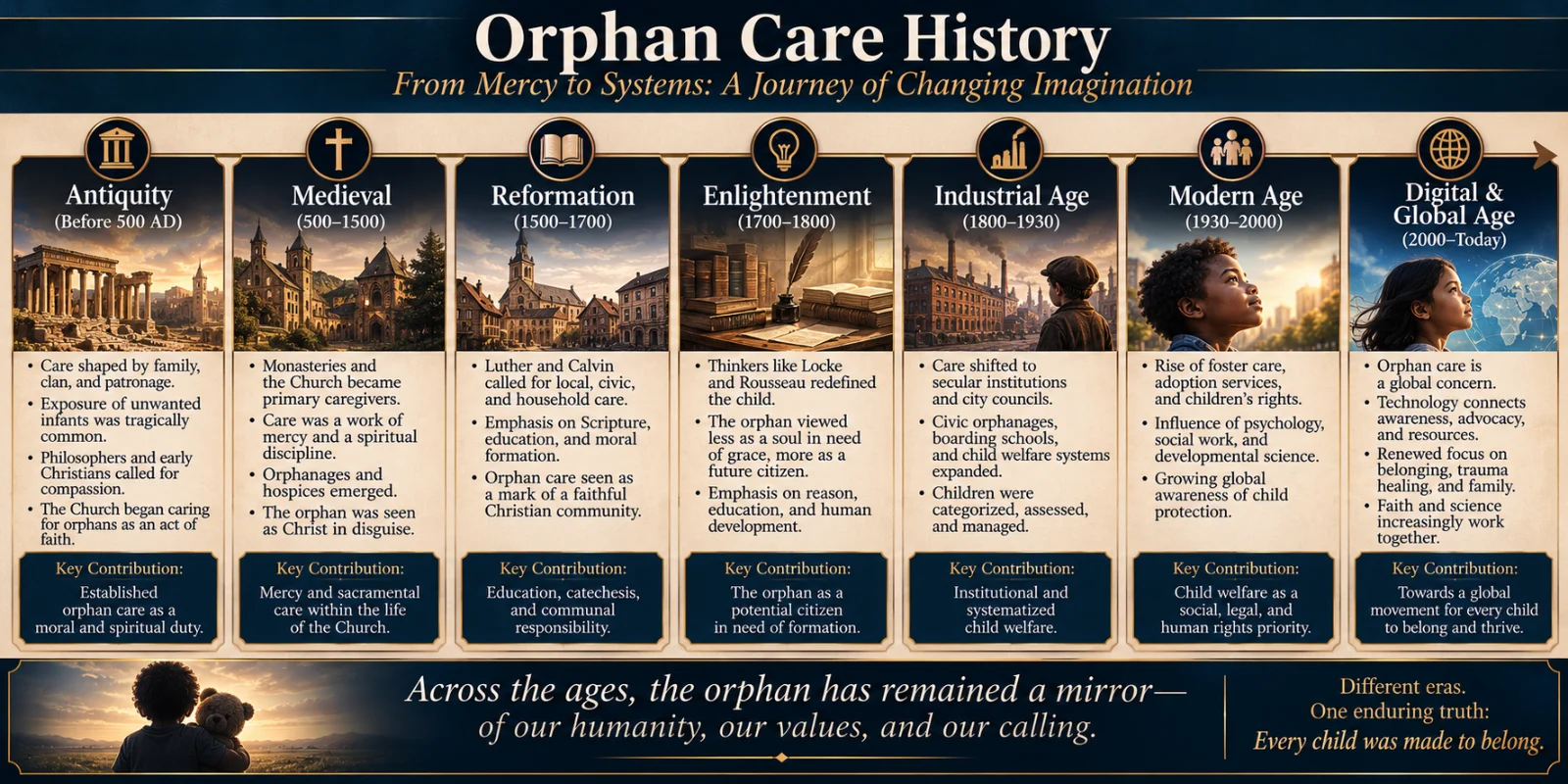

Here’s the main lesson I hope to convey in this series: the concepts of justice as a moral issue and morality as a justice issue are deeply interconnected. Both create the ethical framework of how good societies function. Either one, without the other, is incomplete, flawed, and unworkable. Therefore, we cannot adequately address the orphan crisis without a balanced, Just and Moral approach.
Consider the Log in Our Own Eye
If I demand justice but lack morality, I am like a sounding brass—empty and hollow in my pursuit. If I preach morals but live a life of injustice, I’m no more than a clanging cymbal—no substance, only noise. True love is both moral and just.
Many practitioners of Christianity fail to see the full truth, with a log firmly lodged in one eye. They only see half the story, focused on parts of the message that fit their comfort, ignoring the greater call to integrity and compassion. In their blind spots, they miss the deeper teachings of love – justice, and moral alignment must coexist.
We can’t make any headway towards proper orphan care if we fail to recognize the injustice they suffer. Nor will we be able to make any progress in orphan prevention if we don’t call out the immorality that produces most of them. Hello? Anyone listening?
Injustice is inherently immoral, and immorality is deeply unjust. They are two sides of the same coin, inseparable in their impact on human lives. If we fail to grasp this reality—both with our minds and our hearts—we risk living out our Christian faith with a log in one eye, blinded to the fullness of God’s truth.
To better understand the tension between these two profound realities, we will examine a well-known New Testament story and see how Jesus navigated both justice and morality with perfect wisdom.
The Women Caught in Adultery
Jesus’ treatment of the woman caught in adultery (John 8:1-11) is often seen as a moral lesson on mercy and forgiveness – as well as the sinful act of adultery – but it is equally a justice issue in the most profound way. Justice, as the prophets framed it, was not just about punishing wrongdoing but about upholding righteousness, truth, and fairness in all interactions. Jesus’ response exposes both the legal injustice and moral hypocrisy at play in this situation.
The case is a perverted form of justice. The scribes and Pharisees bring the woman before Jesus, claiming she was caught in the act of adultery. According to Levitical law (Leviticus 20:10, Deuteronomy 22:22), both the man and the woman involved in adultery were to be punished. Yet, only the woman is accused, which suggests a biased and unjust application of the law. True justice demands impartiality, yet here the law is being selectively enforced.
When laws are applied unfairly—targeting the vulnerable while excusing others—justice is corrupted. Jesus highlights this flaw in the system. The motive behind the accusation was injustice. The Pharisees were not actually interested in justice – or upholding morality as found in the Law of Moses, for that matter – they were using this woman as a pawn to trap Jesus into contradicting Moses’ Law. This was not a fair trial but a setup—making it a misuse of legal authority for political gain. Exploiting the morality-based legal system for personal or political agendas is unjust. Jesus exposes that this case was not about righteousness but manipulation.
Jesus’ response was about true justice, in the prophetic understanding. Instead of answering directly, Jesus writes in the sand—perhaps listing the sins of the accusers or referencing the law itself. He then delivers a judicial principle rather than a mere moral lesson: “Let him who is without sin cast the first stone.” (John 8:7). Notice, Jesus does not say adultery is not a sin, but He disqualifies unjust judges from executing judgment. True justice demands that those who enforce it be just themselves. Hypocrisy in judgment makes the entire system corrupt.
Jesus tells the woman, “Neither do I condemn you. Go and sin no more.” He demonstrated that justice is full of grace and truth. He upholds moral truth (adultery is wrong) but restores justice by rejecting an unfair trial and giving her a chance at restoration. This should show us that justice is not merely about punishment but also about restoration and fairness. Jesus applies justice by refusing to uphold a corrupt legal process and offering the woman a new path forward.
The Immoral Act of Adultery as a Violation of Justice to the Spouses
Adultery is not merely a moral failure; it is also a profound violation of justice, particularly against the betrayed spouses. Justice is fundamentally about giving people what they are owed, and within the sacred bond of marriage, spouses are owed trust, commitment, and exclusivity – all rare commodities in a fallen world. Adultery, by its very nature, robs the faithful spouse of these essential components, making it an act of deep injustice.
Philosopher Immanuel Kant argued that actions have moral and legal consequences, and that the trust inherent in relationships is a matter of justice: “Adultery is a violation not only of the moral law but also of the trust that is essential for the institution of marriage. The betrayal of that trust is a breach of justice to the spouse, the family, and society at large.”
A Betrayal of the Sacred Marriage Covenant
Marriage is more than a social contract; it is a covenant built on mutual love and respect. Adultery shatters this sacred bond, violating the faithfulness that the betrayed spouse had every right to expect. The marital commitment is not merely a private promise but a solemn vow that carries moral and social weight. When one spouse commits adultery, they disregard the fundamental principles of loyalty and integrity that sustain the relationship, leaving the betrayed partner with a profound sense of dishonor and loss.
St. Augustine of Hippo wrote, “Adultery is a crime not just against God’s law, but against the very order of human relationships. It violates the trust given in marriage and creates an injustice that affects both the guilty and the innocent.” Augustine viewed adultery as an offense that had consequences far beyond individual sin, disrupting the justice of human relationships and divine order.
The Emotional and Psychological Toll
The consequences of adultery extend far beyond the act itself, inflicting severe emotional and psychological harm on the betrayed spouses. The pain, humiliation, and sense of betrayal can lead to long-term emotional distress, including depression, anxiety, and diminished self-worth. The damage is not confined to the individuals directly involved; it ripples through families, affecting children who may witness the breakdown of their home, and even communities that rely on stable family structures for social cohesion. In this way, adultery is not just a personal, moral failing but a social injustice that disrupts the well-being of many.
The Disruption of Stability
Historically and in many cultures, the stability of marriage has been essential for social and economic security, particularly for women and children. In ancient Jewish society, for instance, a woman’s security was often tied to her marriage. If adultery led to divorce, the consequences could be devastating—not only for the betrayed spouse but also for the children and extended family who depended on the marital structure for stability. In a broader sense, adultery undermines the very foundation of family life, making it a destructive force against social order and harmony.
Consequences of Adultery as a Justice Issue
Beyond the immediate betrayal, adultery can have far-reaching consequences, particularly if it results in a child born out of the affair. Historically, such “bastard” children were often ostracized, facing rejection and hardship through no fault of their own. In some cases, they were denied legal recognition, inheritance rights, or social acceptance, effectively rendering them orphans in a societal sense. The innocent child becomes another victim of the immoral choices made by the unfaithful adults, bearing the weight of an injustice they never asked for.
In the end, adultery is as unjust as it is immoral because it takes away what rightfully belongs to another—faithfulness, emotional security, and trust. The betrayed spouses are victims of injustice, dishonor, and loss, while the wider impact extends to families, children, and society at large. Adultery is not simply a personal failing; it is a profound breach of justice that disrupts lives, erodes trust, and diminishes the sanctity of marriage. Those who engage in it not only violate moral principles but also commit an act of profound unfairness to those who have placed their faith and future in their hands.