Orphan justice is the orphan of justice causes.
That line lands with a dull thud because it names something we’ve learned not to see. In the crowded marketplace of moral urgency—causes with slogans, hashtags, metrics, and measurable wins—the orphan rarely makes the shortlist.
Scripture, however, never treats care for the orphan as a niche concern.
“A father to the fatherless, a defender of widows, is God in his holy dwelling.”
— Psalm 68:5
Notice what defines God’s holiness here. Not distance. Not power held at arm’s length. Holiness is revealed as nearness to those most exposed to loss—those without protection, inheritance, or voice. In the biblical imagination, the orphan is not simply a vulnerable individual but a sign of social fracture. When systems fail to protect the orphan, something has gone wrong with justice itself.
Walter Brueggemann names this without softening it:
“The mark of a faithful society is not how it treats the powerful, but how it treats those who have no leverage.”
That lack of leverage is precisely the problem. Orphans cannot amplify their own cause. They do not fund campaigns. They do not vote in blocs. Their suffering is often hidden inside bureaucratic language—cases, placements, outcomes—which dulls our moral imagination while preserving our sense of order.
Globally, an estimated 140 million children are classified as orphans or have lost one or both parents. In the United States, over 400,000 children are in foster care on any given day, many cycling through multiple placements. These numbers are cited often, but numbers alone do not produce justice. They can even anesthetize us.
God’s response is never abstract. God does not outsource care for the orphan to policy alone or charity alone. God identifies personally.
“I will be a father.”
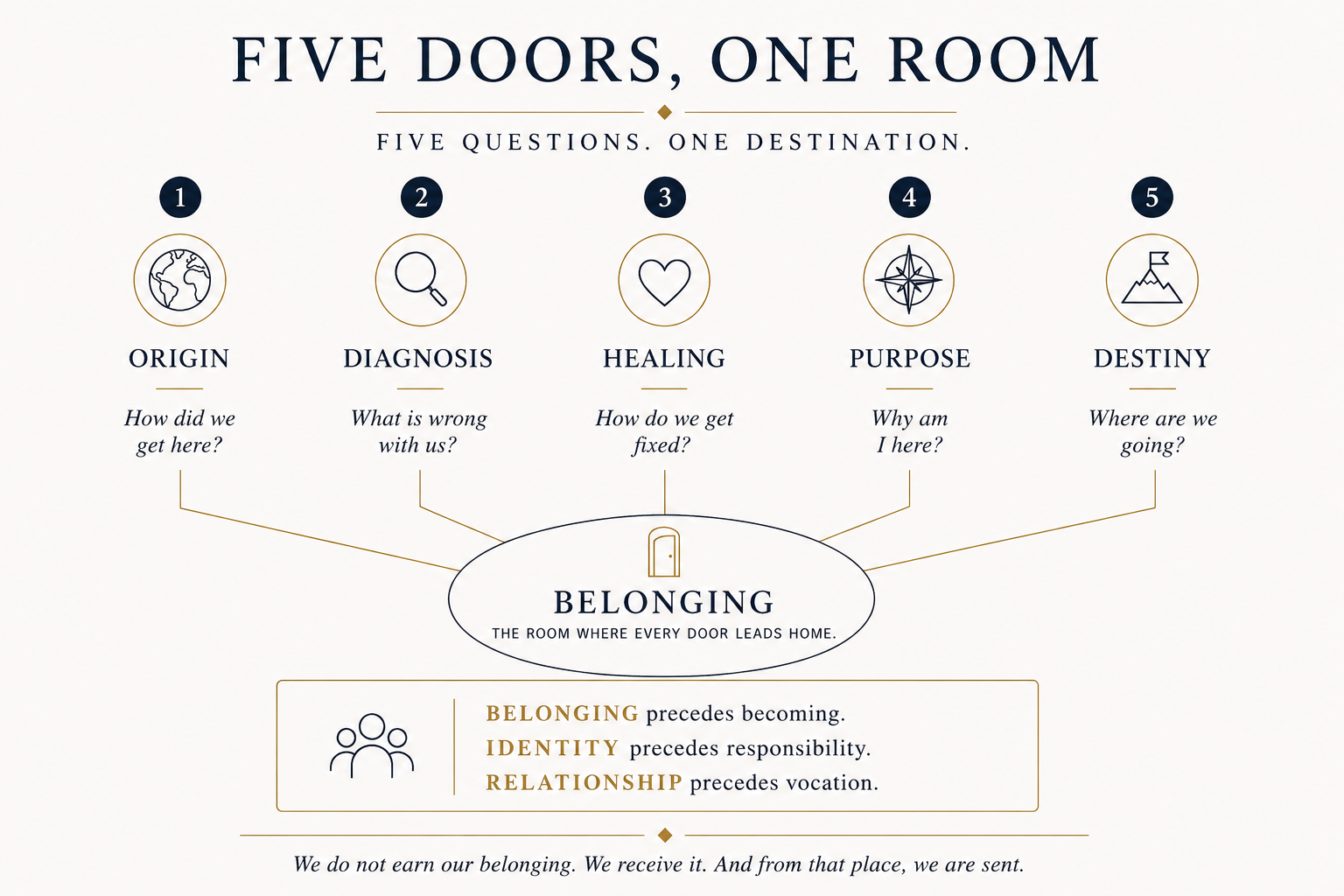
Orphan justice, then, is not primarily about fixing children. It is about restoring belonging. It is about reweaving protection, presence, inheritance, and name. It is slow, costly, and deeply relational—which is why it so often becomes the orphan of justice causes.
But Sunday reminds us of something the week tries to make us forget: God is not rushed. God builds justice the way families are built—through fidelity, presence, and love that stays.
In a world chasing visible wins, the orphan reveals the heart of God. And wherever the orphan is remembered, justice is no longer alone.