
The False Self and the Remembered Name
Orphan is the word Scripture uses not only for those without parents, but for those without place, protection, or personhood. It is the word God
Orphan is the word Scripture uses not only for those without parents, but for those without place, protection, or personhood. It is the word God

Holy Ground: Hard Questions from a Recovering Orphan Survival is sacred. It means you made it through what others didn’t. But grief—true grief—is something different.

About a century ago, much of the Church quietly swallowed an idolatrous idea: that the government could do a better job caring for orphans, and

And shed innocent blood, The blood of their sons and daughters, Whom they sacrificed to the idols of Canaan; And the land was polluted with

If I have raised my hand against the fatherless… Then let my arm fall from the shoulder, Let my arm be torn from the socket.

When my father and my mother forsake me, Then the Lord will take care of me.

If children live in a shitty school district, they learn their education isn’t worth shit.


If children live with the judgmentalism of religious people, they learn the meaning of hypocrisy.
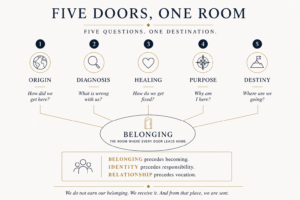
Every human being who has ever lived has asked, in one form or another, the same five questions. You may not have asked them out
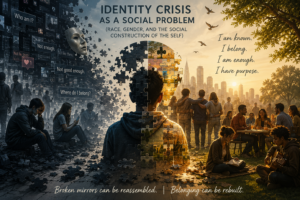
(Race, Gender, and the Social Construction of the Self) We don’t know who we are anymore. Sociologists have been describing this for decades in neutral

No matter what we do, or what is done to us, human agency endures because it belongs to our creation in the image of God.

Neglect accounts for roughly 84% of all child welfare cases—making it the most common form of child maltreatment in the system. While neglect can be

In Minnesota, the Office of the Ombuds for Foster Youth released a troubling report this month: siblings in foster care are being separated and often

Orphaned not by tragedy, but by red tape and mistrust.

The lyrics of Would? explore themes of addiction, loss, guilt, and the internal struggle between self-destruction and redemption. Its raw honesty and haunting melody capture the pain of losing someone to addiction while wrestling with questions of forgiveness and personal responsibility. The song’s repetitive refrain and grunge-driven sound became emblematic of the era’s angst and vulnerability.

Seven Bridges Road There are stars in the southern sky Southward as you go There is moonlight and moss in the trees Down the Seven

I’m Not In Love I’m not in love So don’t forget it It’s just a silly phase I’m going through And just because I call

Little Bo Peep Little Bo Peep has lost her sheep, And can’t tell where to find them. Leave them alone, And they’ll come home, And

Gangland, bangland, A fatherless child’s wasteland. While you dwell within it, You are ever in danger there. A childhood’s killjoy land. A drug infested murder

I’m a little teapot Short and stout Here is my handle Here is my spout When I get all steamed up Hear me shout Just

“Now my husband will love me…” (Genesis 29:32) There’s a raw, deeply human ache in the story of Leah that many of us know all

“Above all else, guard your heart, for everything you do flows from it.” —Proverbs 4:23 Every river has a source. Long before the river reaches

Orphan justice is the orphan of justice causes. That line lands with a dull thud because it names something we’ve learned not to see. In

For many, the worst part of poverty is not the physical lack — it’s the emotional, social, and psychological toll it takes.

To ensure that parents can provide the vital elements of a thriving family, they must be equipped with five protective factors. Developed by the Center

When the System Fails to Protect Each year in the United States, approximately 1,800 children die due to abuse or severe neglect, often in families
