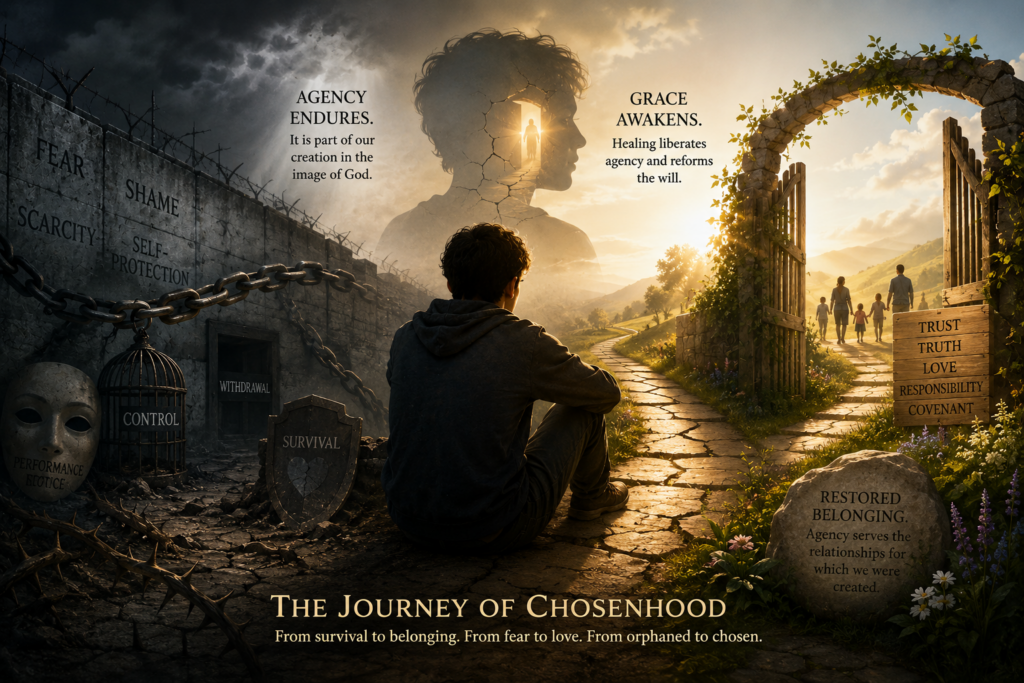
No matter what we do, or what is done to us, human agency endures because it belongs to our creation in the image of God. It is part of what it means to be a person—to respond, initiate, love, refuse, repent, create, and participate in covenant. Sin does not erase that capacity, but it wounds the will through which agency is expressed.
Orphanhood then deepens that wound by teaching the person to interpret life through fear, shame, scarcity, and self-protection. As a result, agency remains active, but it is often exercised within a narrowed range of possibilities. The orphan, addict, or trauma survivor is still choosing, but many of those choices have been shaped by survival.
Control may feel safer than trust. Withdrawal may feel wiser than vulnerability. Performance may feel more reliable than receiving love. These actions are real expressions of agency, yet they arise from a will trained to survive outside secure belonging.
Healing, therefore, is not the creation of agency but its liberation and reformation. Grace awakens the person to possibilities that fear had concealed. Within restored belonging, the will can gradually learn to desire and choose trust, truth, love, responsibility, and covenant. The journey of Chosenhood is the recovery of agency from the architecture of survival so that it can once again serve the relationships for which it was created.