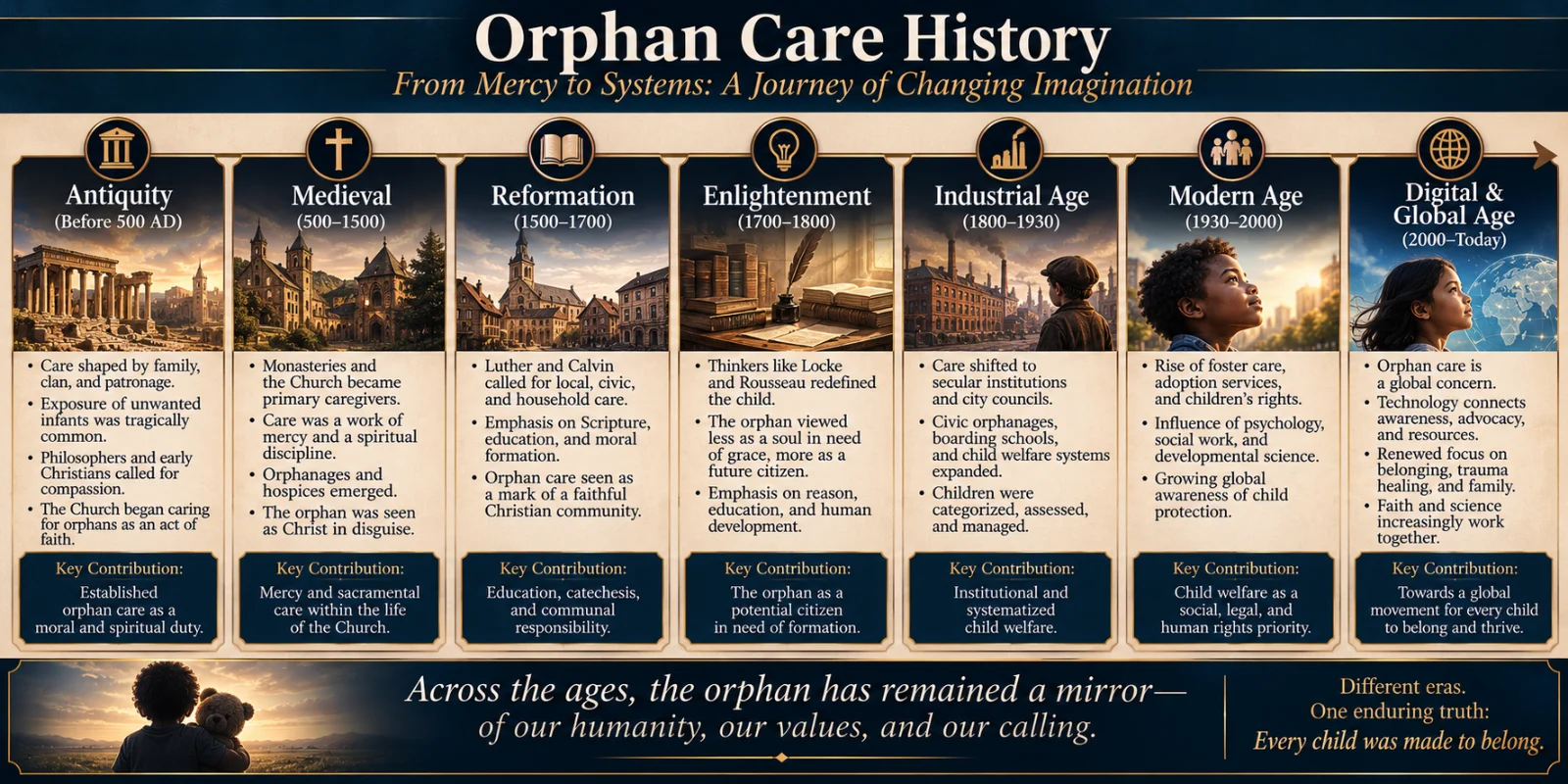

Orphan care can be viewed as a universal ethic, transcending cultural, religious, and societal boundaries. As a universal ethic, orphan care encompasses the principles and values that guide individuals and communities in their responsibility to care for vulnerable children who have lost parental care. Here are some key aspects of orphan care as a universal ethic:
Human dignity: Orphan care recognizes the inherent worth and dignity of every child, irrespective of their family background or circumstances. It emphasizes that all children deserve love, care, and the opportunity to thrive, regardless of their orphaned status.
Compassion and empathy: Orphan care is grounded in compassion and empathy, reflecting a deep concern for the well-being of children who have experienced the loss of parental care. It calls individuals and communities to extend care, support, and understanding to vulnerable children, acknowledging their unique needs and challenges.
Justice and social responsibility: Orphan care highlights the importance of justice and social responsibility in addressing the needs of vulnerable children. It prompts individuals and societies to take action to rectify the injustice and imbalance created by the loss of parental care, ensuring that children have access to opportunities, resources, and a nurturing environment.
Family and community preservation: Orphan care recognizes the value and importance of family and community in a child’s life. It promotes efforts to preserve, strengthen, and support families, whenever possible, to ensure that children can remain within their biological or extended families. When preservation is not possible, it emphasizes the creation of alternative family environments or communities that provide the love, care, and stability that children need to thrive.
Holistic development: Orphan care goes beyond meeting the basic needs of children and emphasizes their holistic development. It recognizes that children require physical, emotional, intellectual, and spiritual support to reach their full potential. Orphan care seeks to create environments that nurture all aspects of a child’s growth and well-being.
Long-term impact: Orphan care focuses on long-term outcomes and aims to break the cycle of vulnerability and deprivation. It strives to equip children with the necessary tools, education, and support to become self-sufficient and contributing members of society, ensuring their long-term well-being and success.
By embracing orphan care as a universal ethic, individuals, communities, and churches can work together to create a world where every child, regardless of their orphaned status, is loved, supported, and provided with the care and opportunities they deserve.
Summary: Orphan care knows no boundaries, transcending cultures and beliefs. It is a universal ethic that recognizes the worth of every child and calls us to extend compassion, justice, and support. By embracing this ethic, we can create a world where every child is embraced with love, empowered to thrive, and offered the opportunities they deserve.